The 15-year option
A 15-year mortgage typically has a higher monthly payment, but it pays the loan off faster, builds equity more quickly, and can save a significant amount of interest over the life of the loan.
Mortgage Strategy
The best term is not automatically the one that pays the house off fastest. It is the one that fits your budget, cash flow, and long-term goals without making the rest of your financial life miserable.
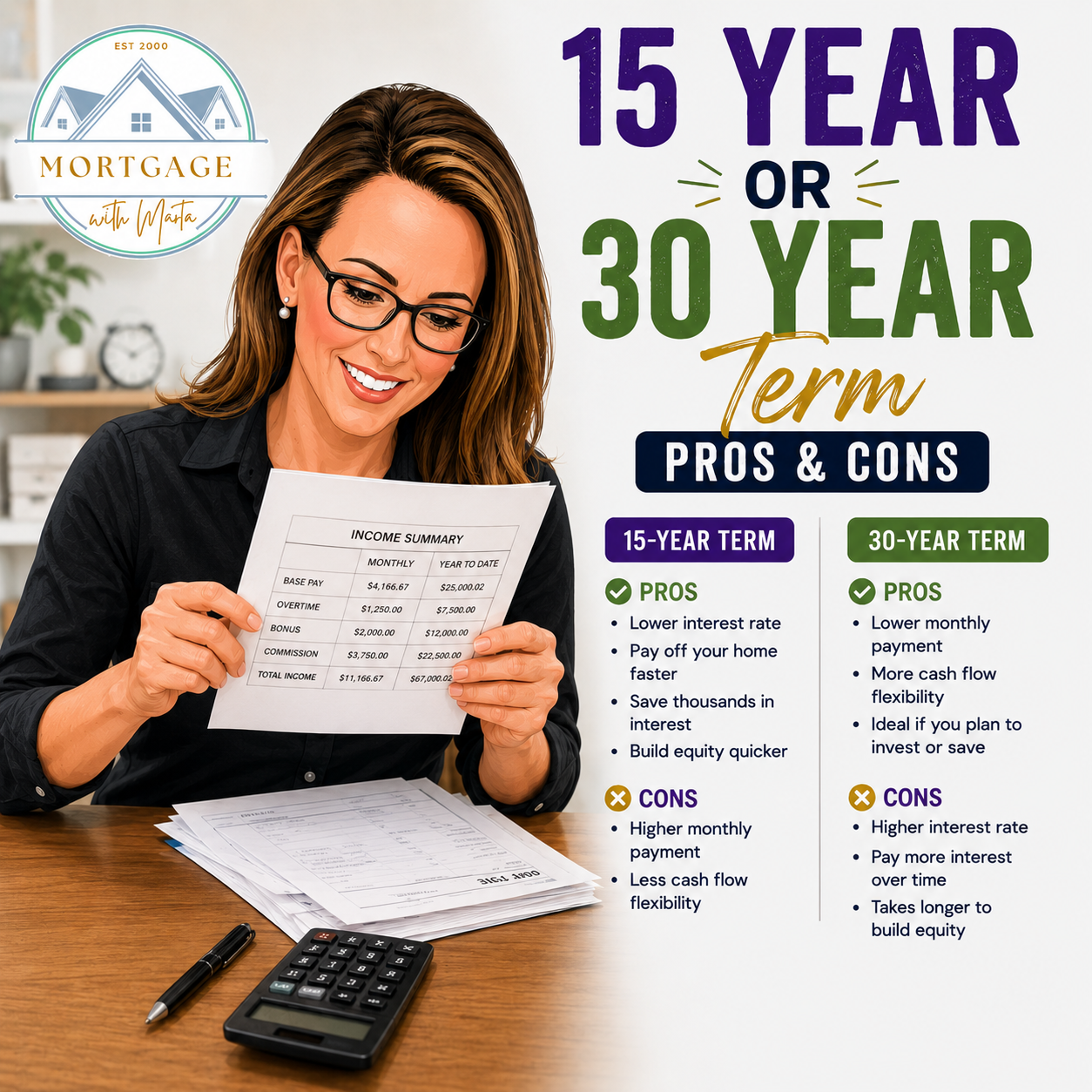
A 15-year mortgage typically has a higher monthly payment, but it pays the loan off faster, builds equity more quickly, and can save a significant amount of interest over the life of the loan.
A 30-year mortgage typically provides a lower required payment and more monthly flexibility. The tradeoff is slower equity growth and more total interest if you keep the loan for the full term.
The lower 30-year payment may leave more room for savings, retirement contributions, home repairs, debt reduction, or simply breathing. You can usually pay extra when your budget allows, but you are not locked into the higher required payment.
Look at the rate, monthly payment, total interest, cash reserves, other financial goals, and how long you expect to keep the loan. Faster is not always smarter if the payment leaves you stretched every month.

Written by Marta Lillard
Mortgage Broker · First Coast Mortgage Funding · NMLS #879436 · Licensed in Florida and Georgia
Questions about your options?