Start with standard financing
Some self-employed borrowers qualify using tax returns, business returns, profit-and-loss statements, and other standard documentation. A careful income analysis should come before assuming a specialty loan is required.
Loan Programs
Being your own boss should not keep you from buying a home. Standard and specialty loan options may use different ways to document stable, qualifying income.
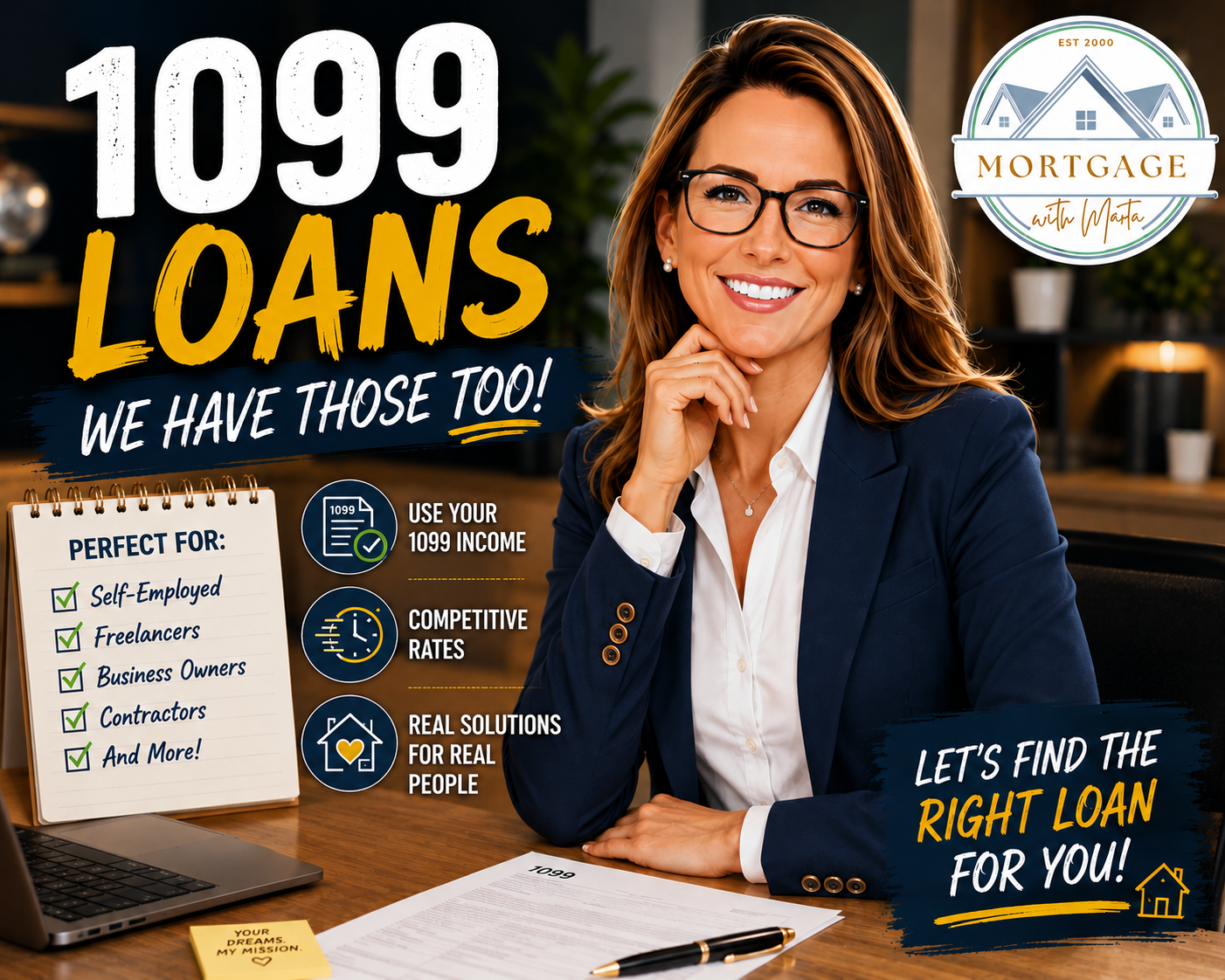
Some self-employed borrowers qualify using tax returns, business returns, profit-and-loss statements, and other standard documentation. A careful income analysis should come before assuming a specialty loan is required.
Eligible non-QM programs may consider 1099 income, bank statements, assets, or other approved documentation. Requirements, expense factors, down payments, rates, and reserves vary.
Lenders review time in the business or line of work, income trends, continuance, credit, assets, and the property. A 1099 by itself does not establish qualifying income.
Flexible documentation can come with different pricing and terms. I will compare the usable income, payment, cash to close, and long-term cost to find the option that makes sense.

Written by Marta Lillard
Mortgage Broker · First Coast Mortgage Funding · NMLS #879436 · Licensed in Florida and Georgia
Questions about your options?